Mirror, Mirror, It's January: Making Peace With What Indoor Heating Did to Your Face

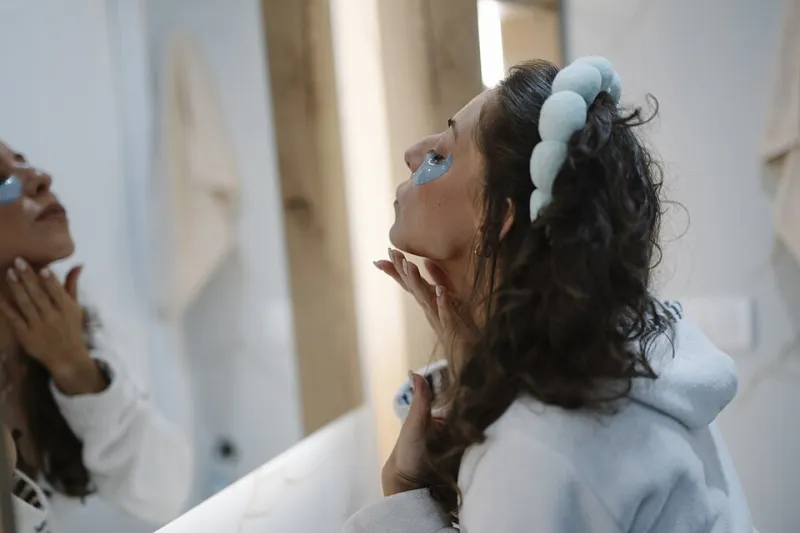
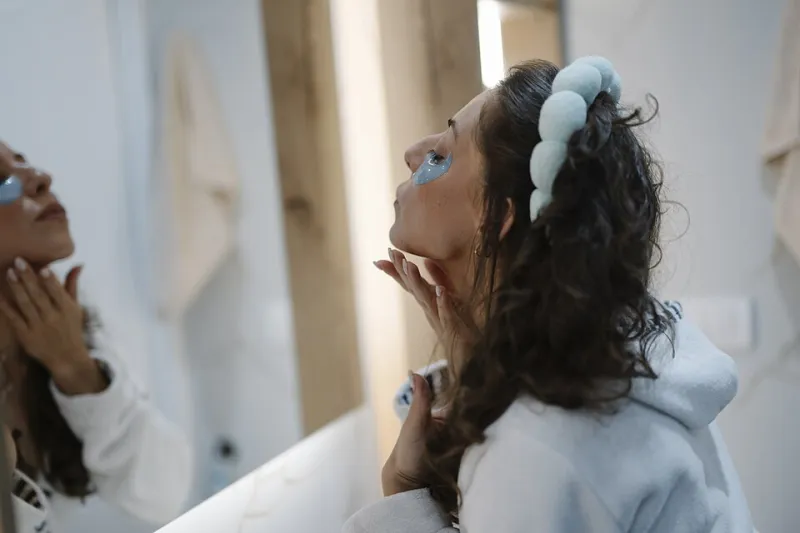
Photo: Wilfredor, CC BY-SA 4.0, via Wikimedia Commons
There's a moment every January when I catch my reflection in the bathroom mirror at 7 a.m., backlit by nothing, and think: who invited her?
It's not that I look bad, exactly. It's that I look like someone I haven't been introduced to. My cheeks have the texture of an old leather handbag. My lips look like they've personally offended someone. Somewhere between the first frost and the third week of the furnace running nonstop, my face checked out and left a dehydrated stranger in its place.
If you've experienced this — and if you live anywhere north of the Mason-Dixon line, you have — congratulations. You've met what I've come to call winter mirror shock.
The Mirror Is a Liar, But It's a Seasonal Liar
Here's the thing nobody tells you: the face you see from November to March is not your actual face. It's your face under artificial conditions.
Forced-air heating drops indoor humidity to desert levels — we're talking 10 to 20 percent, drier than Phoenix in July. Add cold wind outside, hot showers, and mornings so dark your circadian rhythm files a formal complaint, and your skin barrier is essentially working a double shift every single day. No wonder it looks tired.
So when you catch yourself in the mirror and panic? You're not seeing decline. You're seeing weather. And weather, unlike time, is fixable.
The 7 A.M. Problem
Let's talk about morning light, because it's doing you dirty.
In summer, you wake up to soft, forgiving brightness. In January, you wake up in a cave, flick on harsh overhead lights, and study your face like a customs officer. Of course you look rough — you're being interrogated by a 60-watt bulb before you've had coffee.
My fix was embarrassingly simple: I moved a small warm-toned lamp into the bathroom and stopped relying on the ceiling fixture. That's it. The woman in the mirror instantly looked ten percent more alive, and my entire morning mood shifted. Lighting is not vanity. Lighting is infrastructure.
The Three-Step De-Desertification Plan
Once I stopped blaming my face and started blaming the air, everything got easier. Here's the routine that got me back on speaking terms with my reflection:
1. Moisturize onto damp skin, not dry. Hyaluronic acid needs water to hold onto. Apply it within sixty seconds of washing your face — while your skin is still dewy — then seal it with a cream that has actual occlusives in it (ceramides, squalane, a little shea butter). Slapping moisturizer onto bone-dry skin is like watering a plant that's already cracked the pot.
2. Run a humidifier while you sleep. This is the least glamorous, most transformative purchase I made all winter. Forty dollars, zero effort, and my skin stopped flaking off onto my black turtlenecks. Your face spends eight hours a night in that room; make the air worth sleeping in.
3. Stop exfoliating out of spite. When skin looks dull, the instinct is to scrub it into submission. Resist. Over-exfoliating a compromised barrier is like yelling at a tired employee — it makes everything worse. Once a week, gentle, and always followed by moisture.
The Deeper Fix: Change What You're Asking the Mirror
Even with all of this, there will be mornings when the reflection is just... a lot. And that's when the real work happens, the stuff no serum can do.
I started a small experiment: instead of cataloging everything wrong with my winter face, I started asking the mirror one question — what does she need today? Some days it's a rich moisturizer. Some days it's a swipe of cream blush so I look like I've been on a brisk walk, even if I've only walked to the mailbox. Some days it's just a glass of water and a reminder that this is temporary.
Because it is. That's the whole point. The mirror in February is a snapshot of a season, not a verdict. Spring will come back, the humidifier will go quiet, and the woman in the glass will look familiar again.
Until then: dim the lights, dampen the skin, and be a little gentler with her. She's doing her best in a very dry room.