Cold Air Changes Everything: Building a Perfume Wardrobe That Actually Works in Winter
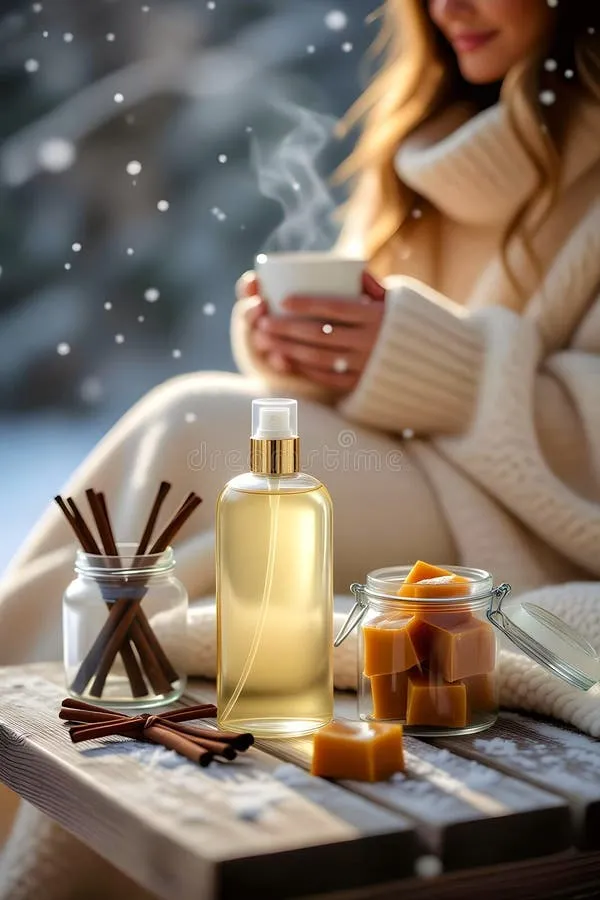
Photo: woman spraying perfume winter coat cozy sweater warm light, via thumbs.dreamstime.com
There's a moment every December when I catch a whiff of my own coat sleeve and realize my perfume has gone missing. Not expired, not used up — just gone, swallowed whole by dry indoor heat and thirty-degree air. If you've ever sprayed your usual scent in January and wondered why it barely registers, you're not imagining things. Cold weather genuinely changes how fragrance behaves.
The good news? Winter is arguably the best season to be a perfume person. You just have to play by different rules.
Why Your Signature Scent Vanishes in the Cold
Fragrance is chemistry meeting atmosphere. Heat amplifies scent molecules, helping them lift off your skin and travel. Cold does the opposite: it keeps those molecules closer to the surface, so projection shrinks and the top notes — the bright, citrusy, sparkling part of a perfume — barely get a chance to shine.
Add in the fact that winter skin is drier skin (and fragrance clings to moisture), and you've got a double whammy. Your airy summer rose simply doesn't have the fuel to perform in February.
The fix isn't more sprays — it's richer sprays. Winter rewards depth: resins, woods, warm spices, and creamy bases that unfold slowly instead of evaporating fast.
The Notes That Thrive Below Freezing
Think of winter fragrance as slow food. These families do the heavy lifting:
- Amber and labdanum — warm, slightly sweet, and clinging to scarves for days. The backbone of most cold-weather icons.
- Vanilla, tonka, and benzoin — cozy without being cupcake-sweet. Look for smoky or boozy vanilla rather than sugary.
- Smoked woods — birch tar, cedar, incense. These read as fireplace, not lumberyard, when done well.
- Spiced florals — rose or iris spiked with cardamom, pepper, or saffron. Proof that winter perfume doesn't have to mean gourmand.
- Leather and tobacco — the olfactory equivalent of a wool coat with sharp shoulders.
If your current rotation is all citrus and clean musks, consider it your spring lineup. Winter wants something with a longer story.
The Layering Trick That Changes Everything
Here's the habit that separates a nice perfume from a presence: layering. Start with an unscented or lightly scented body oil or lotion — hydrated skin holds fragrance dramatically longer. Then spray perfume onto pulse points and, crucially, onto fabric. Your wool coat, your cashmere scarf, the collar of your sweater. Fabric holds scent far longer than skin in cold weather, and you'll catch wafts of it all day.
One caveat: test fabrics first, and never spray silk or anything you'd cry over. Wool and cotton are forgiving; your dry-clean-only slip dress is not.
Building Your Winter Wardrobe at Three Budgets
You don't need a dozen bottles. Three is the magic number: one cozy, one polished, one wild card.
The Under-$60 Start Drugstore and mass-market lines have quietly gotten excellent. Look for vanilla-amber body sprays layered under an affordable eau de toilette — brands like Bath & Body Works, Zara, and Sephora's house labels deliver surprisingly sophisticated gourmands. Layer two inexpensive scents and you've basically created a custom blend.
The $60–$150 Middle Path This is where designer houses shine. Think of the great winter heavyweights — spiced tobacco florals, warm ambery woods — from labels like Yves Saint Laurent, Guerlain, and Marc Jacobs. A 1.0 oz bottle of something rich will last you the entire season, since winter scents require fewer sprays.
The $150+ Investment Piece Niche perfumery is where smoked woods and resinous ambers get truly artistic. Houses like Le Labo, Byredo, Maison Margiela's REPLICA line, and Diptyque offer scents that feel like atmosphere — a cabin, a library, a snow-dusted cedar forest. Buy the smallest size first. Winter perfumes are intense, and a little goes a long way.
Make It Part of the Ritual
Here's my favorite part: fragrance as the final step of getting dressed. Not an afterthought sprayed while running out the door, but a deliberate moment — lotion, then perfume, then coat, then one last spritz on the scarf.
There's something about a scent ritual in winter that feels almost ceremonial. The light is low, the air is sharp, and taking thirty seconds to smell intentional before facing the day is a small luxury that costs nothing extra.
And unlike your outfit, your perfume lingers in rooms after you leave them. In a season built for atmosphere — candles lit, radiators humming, snow coming down outside — why not be the best-smelling thing in it?
Your summer scent will still be there in June. Right now, let the amber take over.